
Guides
An AI tutor that teaches in Hindi or Tamil
An AI tutor in Hindi helps most when it explains and stays in Hindi, gets subject terms right, and still prepares you for an exam in English.
Anish Menon · CEO & Founder, Grout
· 7 min read
An AI tutor in Hindi is worth using if it explains in Hindi and stays in Hindi, gets subject terms right, and still prepares you for an exam written in English. The same test applies to Tamil, Telugu, Bengali and the other Indian languages. This article covers why the language of explanation matters, a method for studying an English-medium syllabus, and how to judge any tutor before you trust it.
Why the language of explanation matters
Many students in India think in one language and are examined in another. A Class 9 student who speaks Tamil at home can read the English sentence "Photosynthesis is the process by which green plants make food" and still not understand it. Part of the effort goes into decoding the sentence, and little is left for the idea.
A concept explained in the language you think in is easier to hold onto. You can ask half-formed questions, notice what you do not follow and rebuild the idea in your own words. Those habits are what make revision work later. Translating every sentence in your head costs time and attention that should go to the idea.
This is a point about learning the idea, not a reason to avoid English. The exam still asks for the English terms, so the home language is a way into the concept and not a replacement for the textbook's vocabulary.
Learn the idea in your language, then the English terms
The simplest method for an English-medium syllabus has two passes. First understand the idea completely in the language you think in. Then attach the English terms the exam uses, and practise writing answers in English.
Take photosynthesis for a Hindi-speaking student. In the first pass, the explanation is entirely in Hindi: पौधे सूर्य के प्रकाश, पानी और कार्बन डाइऑक्साइड से अपना भोजन बनाते हैं. The student can say it back, draw it and explain why leaves are green. In the second pass, the student pairs each Hindi term with the English one:
- प्रकाश संश्लेषण: photosynthesis
- क्लोरोफिल: chlorophyll
- रंध्र: stomata
Only then does the student write a three-mark answer in English from memory. If the English answer comes out wrong, the problem is vocabulary, which is a small thing to fix. If the idea itself was missing, no amount of English practice would have helped.
Choosing an AI tutor in Hindi or another Indian language
A tutor that merely accepts a question in Hindi is not enough. Four checks separate a useful one from a frustrating one.
- Does it stay in the language? Some tools may begin in Hindi and drift into English after a few exchanges. A lesson that quietly changes language defeats the purpose.
- Are the subject terms correct? Check a few terms you already know, in both languages. A wrong word for "stomata" or "refraction" will be memorised and then cost marks.
- Does the voice sound natural? If the tutor speaks, listen for stress, pace and pronunciation. A flat or garbled voice is tiring to listen to.
- Does it handle mixed speech? Students rarely speak pure Hindi or pure Tamil in class. Say a sentence that mixes your language with English terms, such as "yeh stomata kya karta hai?", and see whether the tutor understands and answers sensibly.
Run these checks on a topic you already know well. You will spot mistakes immediately, which you cannot do on a topic you are still learning.
How AI Teacher handles the lesson language
In Grout, AI Teacher is a live teacher at a shared whiteboard, working with one student on one topic at a time. You choose the lesson language in the lesson room from 100 languages. These include Hindi, Tamil, Telugu, Malayalam, Kannada, Bengali, Marathi, Gujarati, Punjabi, Odia, Assamese, Urdu and Nepali. The join screen shows the lesson language and the voice before the lesson starts, so you can see what you are about to get.
The teacher is held to the chosen language for the whole lesson. If you ask it mid-lesson to switch, it points you to the language setting instead of changing on its own. You can change that setting whenever you like, so a student who wants the next explanation in English can do it deliberately. That makes the two-pass method above easy: Hindi for the idea, then English for the terms.
The teacher draws each picture part by part as it names the parts, and it stops when you cut in. Hearing the Hindi name of a part while it appears on the board helps you connect word and picture.
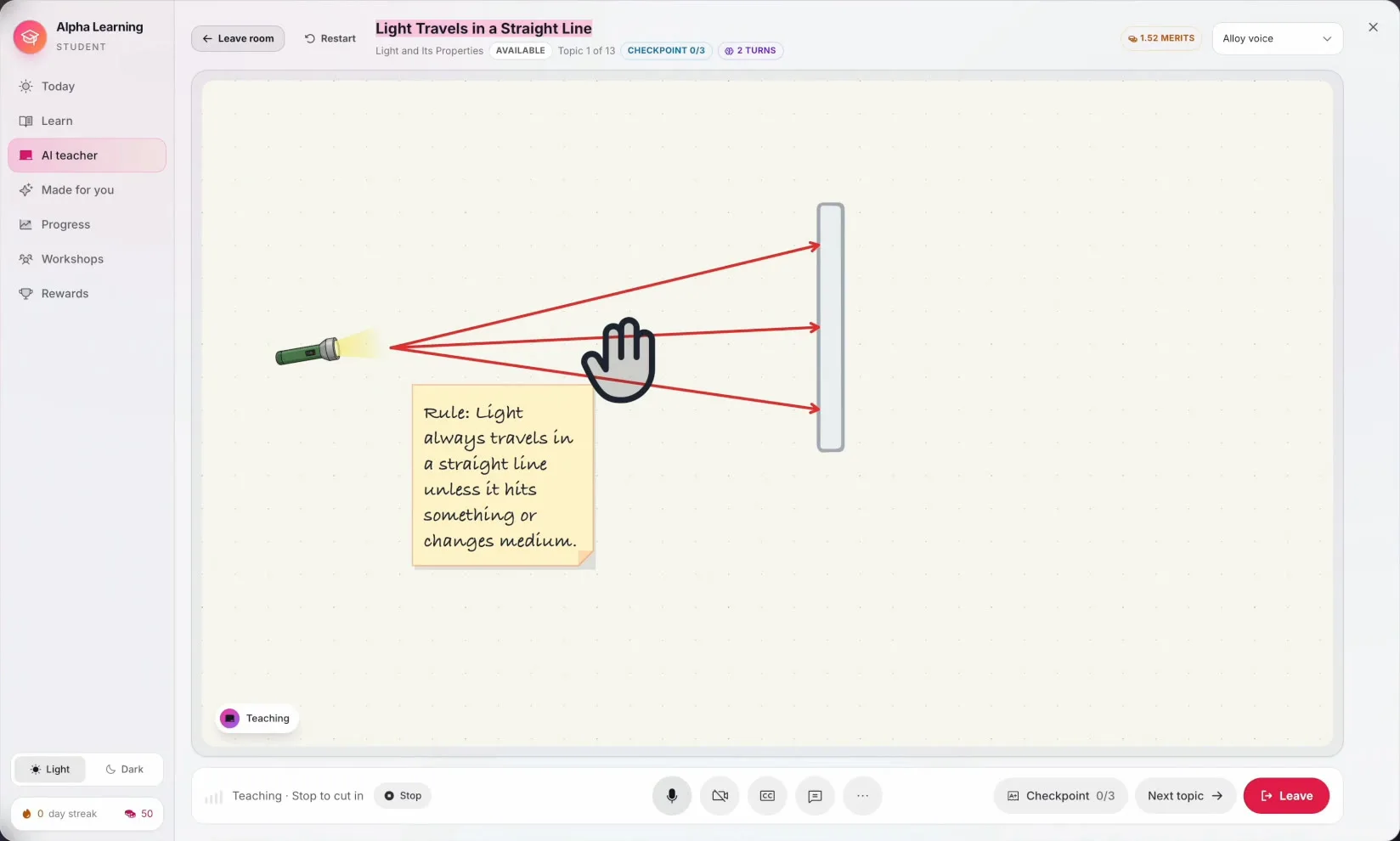
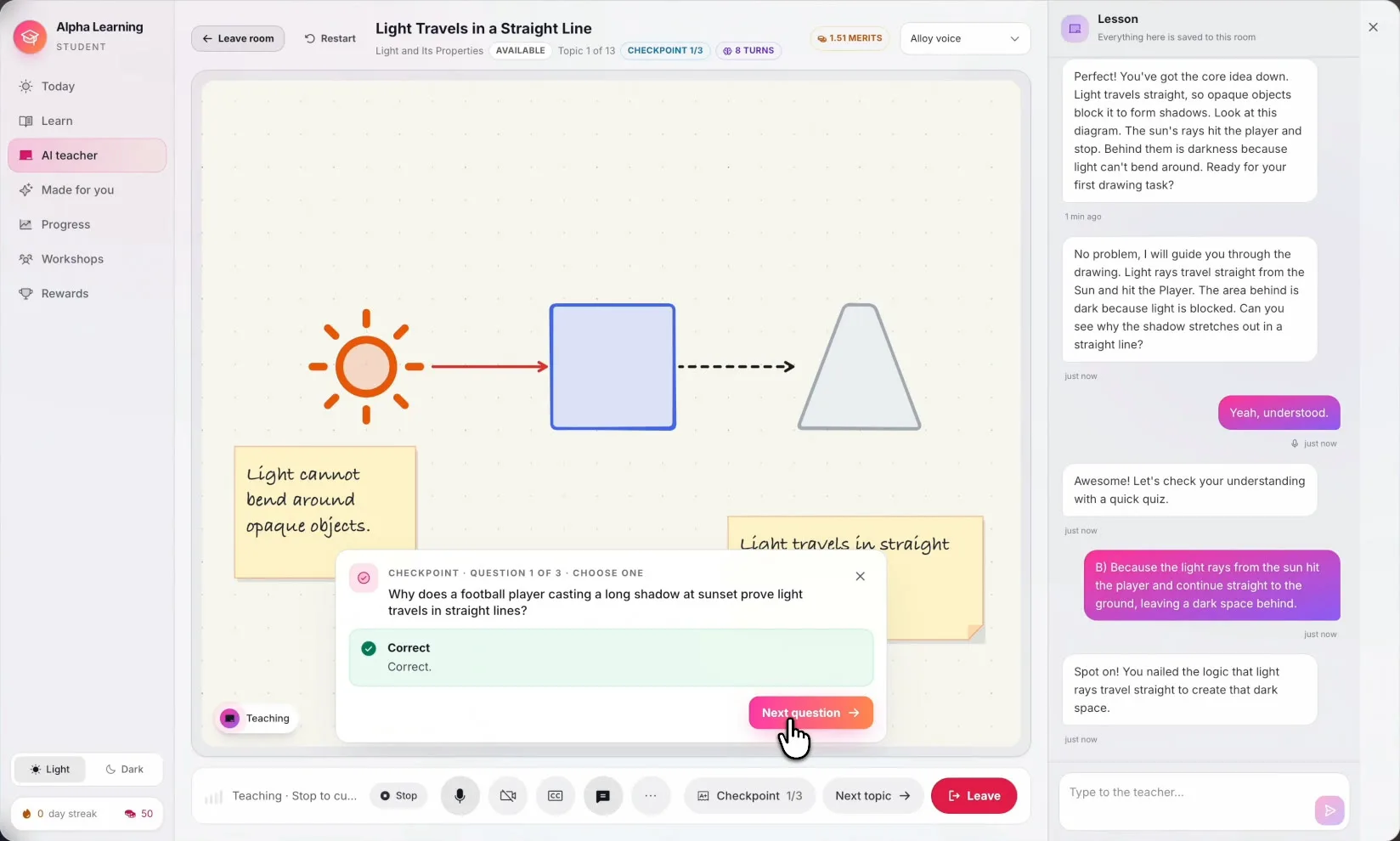
It also runs checkpoint quizzes during the lesson, so you find out within minutes whether the idea has settled.
Teaching from your own textbook
A tutor that teaches general science is less useful than one that teaches your syllabus. In GroutApp you can add your textbook as a PDF or as photos of pages to AI Memory, where it is indexed on your computer and answers cite the pages used. Chapters you add there become the course material AI Teacher draws on, including the book's text and figures. This works for a book printed in English even if the lesson is in Hindi, since the language you pick in the room governs how the teacher speaks. There is more on this in the page about a custom AI teacher built around your own material.
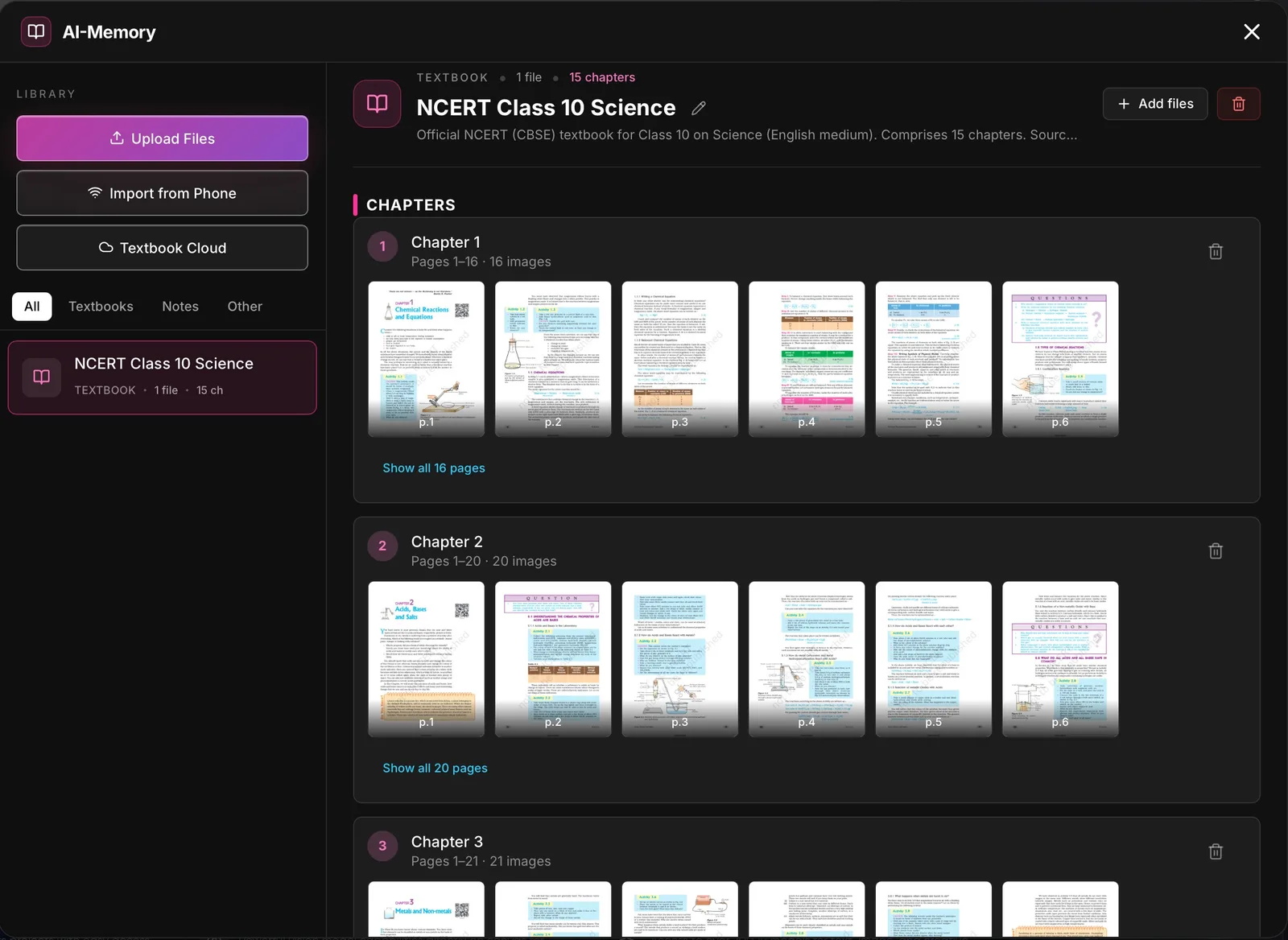
When the lesson is done, open the matching page in your textbook and read the English passage yourself. This is the second pass of the method, done against the real book.
A 30-minute trial for your language
Every Grout account starts with 30 free minutes of AI Teacher, which is enough to judge whether it works in your language. Use them on a chapter you have already studied, so you can tell right from wrong.
- Minutes 0 to 2: On the join screen, check the lesson language and listen to the voice. Change them if needed.
- Minutes 2 to 15: Take one topic and ask for the explanation in your language. Interrupt twice with a mixed-language question.
- Minutes 15 to 22: Ask for the key terms. Compare them with your textbook's glossary and note any that are wrong or awkward.
- Minutes 22 to 30: Do the checkpoint quiz, then try to explain the topic back in your own words.
If the language holds, the terms are right and the voice is comfortable, the tutor passes. If not, you have lost half an hour and spent nothing.
Limits you should know about
Quality is not the same across all 100 languages. It is strongest in widely spoken ones, so a widely spoken language will generally go better than one with fewer speakers. That is why the trial matters: do not assume the result in your language from the list alone.
AI Teacher runs on Google Gemini Live and needs an internet connection, so it will not work on a train with no signal. A Grout account is required, and the app runs on Windows 10 or later and macOS 10.15 or later, not on phones or tablets. The app interface itself is available in English, French, Spanish, German and Dutch only. Menus and buttons will not appear in Hindi or Tamil, even though the lesson can be taught in them.
Technical terms deserve a human check. An AI teacher can mispronounce or mistranslate a term, and it cannot know which wording your teacher or board prefers. Compare against your textbook and ask your subject teacher when the two disagree. For exam rules and marking expectations, rely on your teacher or board, not on any tool.
If connectivity is the real obstacle, Grout also has on-device voice tutors, which are a separate feature from AI Teacher. They are described on the offline AI teacher page. Check there, and in a trial, which languages they support before relying on them.
Your next step: pick one chapter you already know, download Grout, and spend your 30 free minutes testing it in your own language, using the four checks above.