

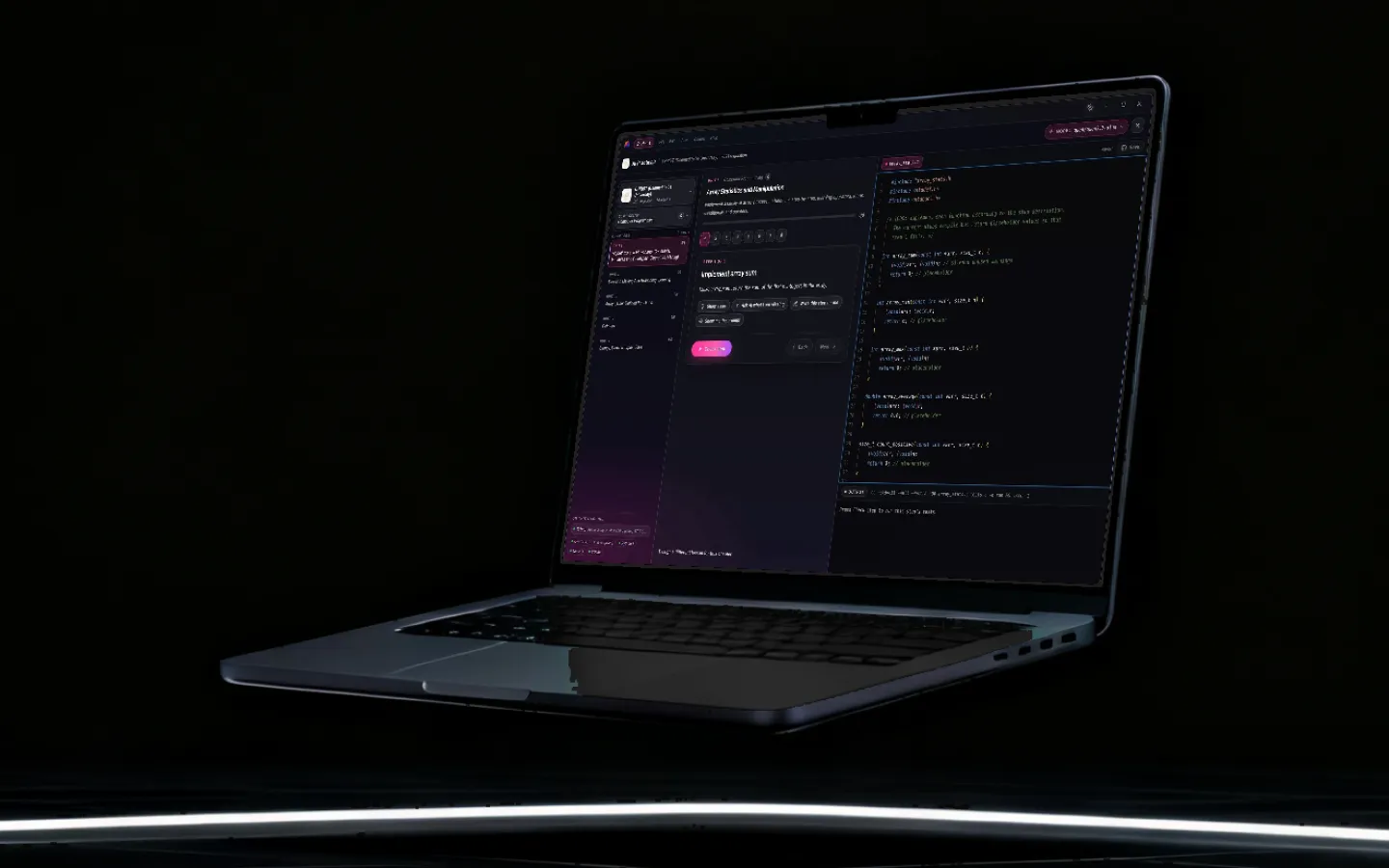
1322 lab practicals, graded by the compiler.
GroutCode ships the transcribed syllabus for universities and school boards in India, the United Kingdom and France, with stepped lab lessons mapped to real course codes, semester by semester. You write the code; a real toolchain decides whether it passes; the model reviews it afterwards and tells you what breaks it.
Updated
1322
lab lessons
1497
courses transcribed
32
syllabuses
3
countries
Supported syllabuses
Pick your university or board, then your semester. Every page lists the courses with practicals and the lab lessons for each.
India
18 syllabuses · 942 lab lessons

KTU
APJ Abdul Kalam Technological University
The 2024 scheme for Kerala’s technological university, covering CSE, IT, AI & DS and ECE from semester three onwards.
85
lab lessons

VTU
Visvesvaraya Technological University
Karnataka’s 2022 scheme across CSE, ISE, AI-ML, AI-DS and ECE, including the dedicated lab courses.
123
lab lessons

Anna University
Anna University, Chennai
Anna University’s Regulations 2021 B.E. CSE, from Python and C programming to the data structures and OOP laboratories.
31
lab lessons

AKTU
Dr. A.P.J. Abdul Kalam Technical University, Lucknow
AKTU Lucknow’s B.Tech CSE for the 2026-27 session: C programming, data structures, Java OOP and the operating system lab.
28
lab lessons

JNTUH
Jawaharlal Nehru Technological University Hyderabad
JNTU Hyderabad’s R22 B.Tech CSE, from Programming for Problem Solving to the data structures and Java labs, I-I to IV-I.
31
lab lessons

GTU
Gujarat Technological University
Gujarat Technological University’s B.E. Computer Engineering on the 2024 scheme, across C, Python, SQL, Java and web.
111
lab lessons

SPPU
Savitribai Phule Pune University
Pune University’s 2024 pattern (NEP 2020) B.E. Computer Engineering, with the data structures, OOP and database laboratories.
29
lab lessons

Mumbai University
University of Mumbai
University of Mumbai’s NEP 2020 B.E. Computer Engineering: C programming, data structures, Python, algorithms and DBMS labs.
48
lab lessons

Delhi University
University of Delhi
Delhi University’s B.Sc. (Hons.) Computer Science under UGCF 2022: C++ data structures, Python OOP, algorithms and DBMS.
42
lab lessons

MAKAUT
Maulana Abul Kalam Azad University of Technology, West Bengal
MAKAUT West Bengal’s B.Tech CSE (R20), from Programming for Problem Solving through data structures, algorithms and Java.
27
lab lessons

RGPV
Rajiv Gandhi Proudyogiki Vishwavidyalaya, Bhopal
RGPV Bhopal’s B.Tech CSE on the AICTE flexible curricula, including the Programming Practices labs in Java and Python.
36
lab lessons

IGNOU BCA
Indira Gandhi National Open University
IGNOU’s BCA_NEW programme for distance learners: C and Python, C++, Java, data structures and DBMS labs.
59
lab lessons

Calicut
University of Calicut
The CUFYUGP 2024 four-year honours programmes in Computer Science and BCA, from the first semester.
128
lab lessons

CHRIST
CHRIST (Deemed to be University)
The 2021 regulation B.Tech CSE programme, weighted towards Java and databases.
94
lab lessons

CBSE
CBSE
The 2026-27 CBSE curriculum for Computer Science 083 and Informatics Practices 065, in Python and SQL.
15
lab lessons

ICSE / ISC
CISCE (ICSE / ISC)
The 2026-27 CISCE syllabus: Computer Applications at ICSE and Computer Science at ISC, both in Java.
16
lab lessons

Tamil Nadu HSC
Tamil Nadu State Board (Higher Secondary)
Tamil Nadu State Board Computer Science for Higher Secondary first and second year: the C++ and Python practical exercises.
20
lab lessons

Kerala Plus One & Plus Two
Directorate of Higher Secondary Education, Kerala
Kerala’s Plus One and Plus Two Computer Science and Computer Applications practicals, in Python, C++ and SQL.
19
lab lessons
United Kingdom
8 syllabuses · 244 lab lessons

Oxford
University of Oxford
University of Oxford Computer Science course synopses for 2026-27: databases, database systems implementation and AI.
27
lab lessons

Cambridge
University of Cambridge
The Cambridge Computer Science Tripos, Parts IA and IB: algorithms, databases, object-oriented programming, C and C++.
36
lab lessons

Imperial College
Imperial College London
Imperial College London BEng/MEng Computing: computing practicals, algorithms, databases, operating systems and machine learning.
24
lab lessons

UCL
University College London
UCL BSc and MEng Computer Science, Years 1 to 4: programming principles, OOP, algorithms, compilers and systems.
51
lab lessons

Edinburgh
The University of Edinburgh
Edinburgh Informatics, Years 1 to 4: programming, algorithms and data structures, computer systems, compilers and databases.
43
lab lessons

Manchester
The University of Manchester
Manchester BSc Computer Science, Years 1 and 2: programming, databases, AI, algorithms, data structures and data science.
30
lab lessons

AQA
AQA
AQA GCSE Computer Science (8525) and AS/A-level (7516/7517) programming, Years 10 to 13, in Python and SQL.
14
lab lessons

OCR
Cambridge OCR
OCR GCSE Computer Science J277 and A Level H446 algorithms and programming, in Python.
19
lab lessons
France
6 syllabuses · 136 lab lessons

Sorbonne
Sorbonne Université
Sorbonne Université’s Licence d’Informatique, L1 to L3: programming, C, object-oriented Java, data structures and databases.
27
lab lessons

Paris-Saclay
Université Paris-Saclay
Université Paris-Saclay’s Licence Informatique: programming, algorithmics, modular and object programming in C++ and Java.
26
lab lessons

Grenoble Alpes
Université Grenoble Alpes
Université Grenoble Alpes’s Licence Informatique (UFR IM2AG): imperative programming in C, software projects and databases.
41
lab lessons

Lyon 1
Université Claude Bernard Lyon 1
Université Claude Bernard Lyon 1’s Licence Informatique: algorithmics, data structures, databases, systems and object-oriented C++.
24
lab lessons

Bac NSI
Éducation nationale — Bac NSI
The lycée Numérique et sciences informatiques speciality, Première and Terminale, in Python and SQL.
9
lab lessons

BTS SIO
BTS Services informatiques aux organisations
BTS SIO option SLAM: applied algorithmics and application development in Python, Java and SQL.
9
lab lessons
How codelab works
The design decisions that make an AI lab tool trustworthy rather than convenient.
The compiler decides, not the model
A toolchain compiles your code and runs the tests. The model never issues the verdict, so it cannot tell you your code works when the compiler disagrees, or fail you for a style it dislikes.
8 to 15 checks per lesson
Each practical is stepped, with an instruction and a check per step. You find out which change broke what while you still remember making it, instead of getting one verdict an hour later.
Runs on a lab machine, offline
Lessons, syllabus and test runner are bundled. The compile-and-check loop needs no connection — only the review at the end uses a model, local or your own key.
Mapped to real course codes
A lesson belongs to a specific course code in a specific scheme, and the language is set per course rather than guessed from the title.
The problem with AI in a programming lab
Give a first-year student a chatbot and a lab sheet, and the lab sheet gets completed in four minutes. Nothing is learned, the submission is indistinguishable from a good one, and the student discovers in the end semester exam that they cannot write a loop.
Banning the tool does not work either — it is on their phone. So the question is not whether AI is in the lab. It is what the AI is allowed to do.
What we settled on
- The model may not produce your submission. It writes the lesson and the tests, before you start. What you hand in is what you typed.
- The model may not grade you. The compiler and the test runner decide. This is not a policy, it is the architecture — the model never sees the pass/fail decision.
- The model reviews. After the tests pass, it reads your code and names the input that breaks it. That is the job a test runner genuinely cannot do, and it is where a student actually learns something.
The result is a lab where using the AI makes you better at the subject instead of better at hiding. For the broader argument, see using AI for homework without cheating.

Frequently asked questions
Which university syllabuses does GroutCode support?
GroutCode ships transcribed syllabuses and authored lab lessons for KTU (2024 scheme), VTU (2022 scheme), Anna University (R2021), AKTU (2026-27 session), JNTUH (R22), GTU (2024 scheme), SPPU (2024 pattern), Mumbai University (NEP 2020), Delhi University (UGCF 2022), MAKAUT (R20), RGPV (AICTE flexible curricula), IGNOU BCA (BCA_NEW 2024), Calicut (CUFYUGP 2024), CHRIST (2021 regulation), CBSE (2026-27 curriculum), ICSE / ISC (2026-27 syllabus), Tamil Nadu HSC (2023 textbooks), Kerala Plus One & Plus Two (2026-27), Oxford (2026-27), Cambridge (2026-27), Imperial College (2026-27), UCL (2026/27), Edinburgh (2026/27), Manchester (2026 entry), AQA (GCSE 8525 · A-level 7517), OCR (J277 · H446), Sorbonne (2025-26), Paris-Saclay (2026-27), Grenoble Alpes (2026-27), Lyon 1 (2026-27), Bac NSI (Première & Terminale), BTS SIO (SLAM 2025) — 1497 courses and 1322 lab lessons in total.
Which countries are covered?
India, the United Kingdom and France. Indian packs cover technological universities, state universities and the CBSE, CISCE, Tamil Nadu and Kerala boards; UK packs cover Oxford, Cambridge, Imperial, UCL, Edinburgh, Manchester and the AQA and OCR qualifications; French packs cover the Licence Informatique at Sorbonne, Paris-Saclay, Grenoble Alpes and Lyon 1, plus NSI and BTS SIO.
Are these the official syllabus documents?
The syllabus is transcribed from the institution’s own published scheme documents, and the app records what was downloaded, from where, and its checksum. Always check the scheme or regulation year against your own — a 2022 scheme student should not be working from a 2024 one.
Does the AI write my lab program for me?
No. Each lesson gives you a starter file with the signatures and the TODOs; you implement them. The toolchain compiles and tests your work, and only after the tests pass does the model read your implementation and tell you the input that breaks it. That order is the point: the AI reviews, it does not grade.
What languages are the practicals in?
C (401), Python (355), Java (257), SQL (140), C++ (115), Node.js (54). The language is set per course code, because the same subject is taught in different languages at different institutions.
My university is not listed. Can it be added?
Packs are added by transcribing the official scheme and then authoring lessons against the course codes that have practical work. If your institution is missing, get in touch with a link to the published syllabus.
Do I need a compiler installed?
Yes, for the language your course uses. GroutCode detects which toolchains are present and tells you what is missing and what would fix it, rather than failing silently.
Your syllabus, with the checks built in
GroutCode is included in every Grout Suite license. Free download for Windows and macOS.
Download GroutCode