

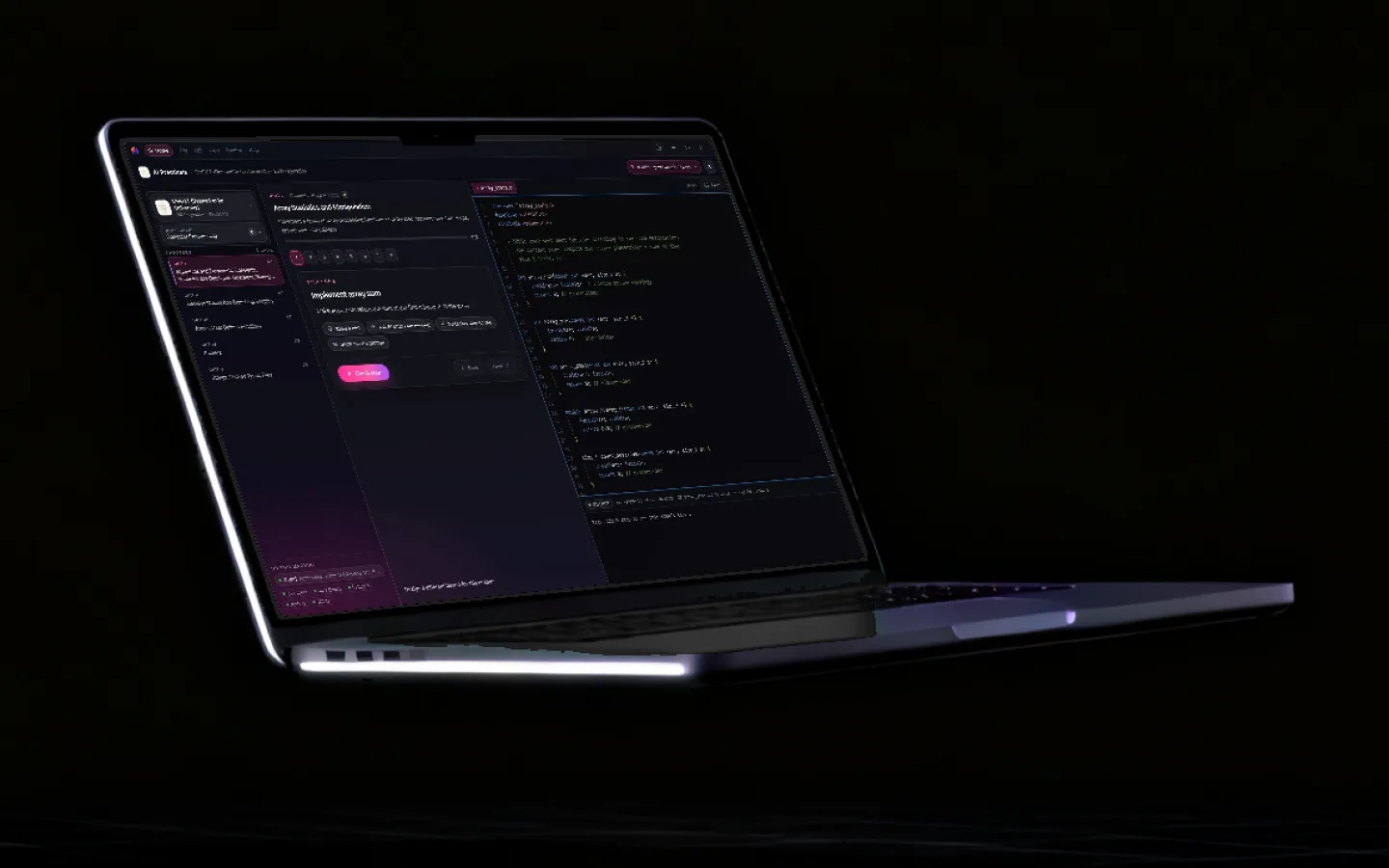
Put your syllabus in your students' hands.
We transcribe your official scheme, map it to real course codes, and author stepped lab practicals that a compiler verifies — not a model. Your students open GroutCode, pick your institution, and work through their own curriculum.
Updated
32
institutions live
1497
courses transcribed
1322
lab lessons authored
6
languages
Already live: KTU · VTU · Anna University · AKTU · JNTUH · GTU · SPPU · Mumbai University · Delhi University · MAKAUT · RGPV · IGNOU BCA · Calicut · CHRIST · CBSE · ICSE / ISC · Tamil Nadu HSC · Kerala Plus One & Plus Two · Oxford · Cambridge · Imperial College · UCL · Edinburgh · Manchester · AQA · OCR · Sorbonne · Paris-Saclay · Grenoble Alpes · Lyon 1 · Bac NSI · BTS SIO
What you get
What an institutional curriculum pack actually contains.
Your scheme, transcribed
We take the official scheme document and transcribe it course by course — codes, titles, semesters, units and topics — and record the source and its checksum so it can be audited later.
Lab lessons per course code
Stepped practicals authored against the courses that carry practical work, in the language that course actually uses. Not a generic exercise relabelled.
Compiler-verified, not model-graded
Every lesson ships with a starter file and a test file. The toolchain decides whether a student passes; the AI reviews the code afterwards and names the input that breaks it.
Runs on your lab machines
The lessons, the syllabus and the test runner are bundled in the app. The compile-and-check loop needs no internet, which matters on a filtered campus network.
Staff visibility
Faculty see progress per student, and every AI-assisted submission carries a usage report — which models were invoked and how much.
Six languages supported
C, C++, Java, Python, Node.js and SQL, assigned per course code rather than guessed from the course title.
How it works
Your faculty sign off on the mapping before any lesson is written.
- 1
You send the scheme
The published syllabus PDF, the regulation year, and which programmes you want covered. One link is usually enough to start.
- 2
We transcribe and map
Every course is transcribed into a structured syllabus file. We identify which course codes carry practical work and which language each one is taught in.
- 3
You review the mapping
Before a single lesson is authored, your faculty confirm the course list and the language assignments. Getting this wrong puts students in the wrong compiler.
- 4
Lessons are authored
Each practical is written as 8 to 15 stepped tasks with a starter file, a test file, and a reference solution used only by our verifier.
- 5
Every lesson is compiled
Nothing ships until it builds and its tests pass against the reference. A lesson that does not compile is not a lesson.
- 6
The pack goes live
Your institution appears in the picker inside GroutCode, and your students select their scheme and start work.
Why a syllabus-specific pack beats a generic course
Every institution already has access to an enormous amount of generic programming material. Almost none of it is organised the way a scheme is organised, which is why students still arrive at a lab sheet with no idea which of the thousand tutorials they have seen is the relevant one.
A pack fixes the mapping problem. A student in semester five opens their own scheme, sees their own course codes, and gets a practical written for the syllabus they will actually be examined on — in the language their department teaches it in, which is not something you can infer from a course title. “Data Structures” is C at one university and Java at another.
And it changes what AI does in the lab
Give a first-year student a chatbot and a lab sheet and the sheet is done in four minutes, with nothing learned. The design here makes that impossible: the model writes the lesson and the tests before the student starts, the compiler issues the verdict, and the model only sees the student’s code afterwards — to review it, not to grade it.
The result is a lab where using the AI makes a student better at the subject rather than better at hiding. See how a practical runs.

Start an enquiry
Tell us the institution and the scheme. We reply within two working days.
Frequently asked questions
What does it cost to add our syllabus?
Transcribing a scheme and authoring its lab lessons is work we take on as part of an institutional licence rather than billing separately for it. Tell us the programme and the scale and we will be specific about what is involved and what a licence looks like for your student numbers.
How long does it take?
The transcription of a full scheme is usually days rather than weeks. Authoring lessons is the longer part, because every one is compiled and tested before it ships. A single programme is typically ready inside a few weeks; we prioritise the courses your next term actually needs.
Who owns the syllabus content?
The syllabus is yours — we transcribe what your institution has already published. The lesson material we author around it is ours, and it ships to your students under your institutional licence.
Can our own faculty write or review lessons?
Yes, and it produces better material. Faculty review of the course-to-language mapping is already part of the process, and departments that want to author their own practicals against their course codes can do that.
Do students need internet in the lab?
No. Lessons, the syllabus and the test runner are bundled in the app and run locally. Only the AI review step needs a model, which can be a local one on the same machine.
What if our scheme changes?
Schemes get revised, and the pack carries its regulation year precisely so students can tell whether it is theirs. When you publish a new scheme we transcribe it as a separate pack rather than overwriting the old one, so students mid-programme keep working from the syllabus they enrolled under.
Which institutions are already on Grout?
GroutCode currently ships 32 packs — KTU (2024 scheme), VTU (2022 scheme), Anna University (R2021), AKTU (2026-27 session), JNTUH (R22), GTU (2024 scheme), SPPU (2024 pattern), Mumbai University (NEP 2020), Delhi University (UGCF 2022), MAKAUT (R20), RGPV (AICTE flexible curricula), IGNOU BCA (BCA_NEW 2024), Calicut (CUFYUGP 2024), CHRIST (2021 regulation), CBSE (2026-27 curriculum), ICSE / ISC (2026-27 syllabus), Tamil Nadu HSC (2023 textbooks), Kerala Plus One & Plus Two (2026-27), Oxford (2026-27), Cambridge (2026-27), Imperial College (2026-27), UCL (2026/27), Edinburgh (2026/27), Manchester (2026 entry), AQA (GCSE 8525 · A-level 7517), OCR (J277 · H446), Sorbonne (2025-26), Paris-Saclay (2026-27), Grenoble Alpes (2026-27), Lyon 1 (2026-27), Bac NSI (Première & Terminale), BTS SIO (SLAM 2025) — covering 1497 transcribed courses and 1322 authored lab lessons.